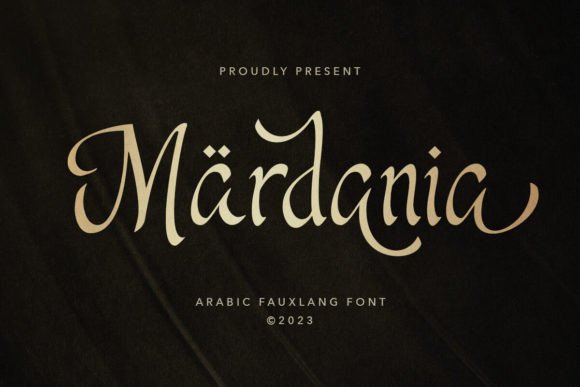
Mardania: Blending Arabic Calligraphy with Modern Design
In the world of visual communication, there is a constant tension between standing out and remaining accessible. We want our designs to have a distinct cultural voice, a sense of history and artistry, but we also need to ensure our message is understood by a broad audience. This is where a thoughtfully crafted creative font can change the entire dynamic of a project. It allows us to borrow the aesthetic weight of a rich tradition without sacrificing clarity. Mardania is a typeface built on this exact principle. It’s not merely a collection of letters; it’s a design tool that channels the fluid elegance of Arabic script into a versatile, readable format for the modern designer.
At its core, Mardania is an Arabic fauxlang font. This means its letterforms are deeply inspired by the Arabic alphabet but are crafted to function within a Latin-based system. The result is a typeface with a stunning visual personality. You’ll notice the influence of traditional calligraphy in the sweeping curves, the strategic use of thick and thin strokes, and the overall sense of graceful movement. However, Mardania avoids being purely ornamental. The designers have carefully balanced this stylistic flair with modern typography principles, ensuring that each letter maintains its distinct identity. This makes it a powerful display font that commands attention while remaining surprisingly legible, even in shorter blocks of text.
Finding the Right Context for a Culturally-Inspired Typeface
A typeface like Mardania doesn’t belong everywhere, and that’s what makes it so effective. Its strength lies in its ability to evoke a specific mood and cultural resonance. For projects that aim for an Arabian aesthetic, it’s a natural fit. Consider its role in logo design for a high-end restaurant, a boutique travel agency specializing in Middle Eastern destinations, or a luxury brand inspired by the region. The font immediately establishes a sense of place and sophistication. It communicates a story before a single word of copy is read, forming a cornerstone of a powerful brand identity.
Beyond branding, its applications are rich and varied. In editorial design, Mardania can create breathtaking headlines for magazines, books, or articles exploring art, culture, and cuisine. For event-based projects, it is an exceptional choice. Imagine it on wedding invitations, adding a layer of timeless elegance, or on materials for Ramadan and Islamic holidays, where it honors tradition with a contemporary flair. Its utility extends into packaging design for gourmet goods, cosmetics, or artisanal products, where it can convey a premium, handcrafted quality. Even in the digital realm, as part of a web design for a cultural institution or as eye-catching social media graphics, Mardania brings a level of artistry that standard fonts simply cannot match.
More Than Just Letters: How Font Choice Shapes Perception
The decision to use a specific typeface is a strategic one that influences how your audience perceives your message. A font carries personality. A classic serif font might suggest tradition and authority, while a clean sans serif font feels modern and direct. A script font or handwritten font can feel personal and intimate. Mardania occupies a unique space. It projects professionalism and a deep appreciation for craftsmanship. When used correctly, it elevates the perceived value of a project, making a brand feel more established and thoughtful.
This choice directly impacts visual hierarchy and engagement. A headline set in Mardania is not just read; it’s experienced. Its distinct character draws the eye, guiding the reader through your layout and establishing a clear focal point. This creates a more dynamic and engaging visual journey. The key is consistency. Using Mardania as your primary display typeface across your design assets—from your website headers to your print materials—builds a cohesive and memorable brand image. It becomes a recognizable signature that strengthens your identity over time.
Practical Steps for Integrating Mardania into Your Workflow
If you’re considering Mardania for a project, a practical evaluation is essential. Start by defining the project’s core goal. Is it to feel luxurious, cultural, celebratory, or artistic? If the answer aligns with the font’s personality, it’s a strong candidate. As a premium font, it’s an investment, so ensure the license covers your intended use, whether for a single client project or broader commercial application.
One of the most critical steps is font pairing. A highly stylized display font like Mardania needs a complementary partner for body text. Look for a neutral, highly legible sans serif font or a clean serif font that won’t compete for attention. The goal is contrast and harmony. Set a paragraph of your chosen body font and place a Mardania headline above it. Does it feel balanced? Is the body text easy to read at smaller sizes? This testing phase is non-negotiable. Review the font’s full character set as well. Mardania includes numbers, symbols, and multilingual support, which are crucial for ensuring it can handle the specific demands of your content without any surprises.
Finally, always prioritize readability. While Mardania is designed for clarity, its decorative nature means it’s best suited for headlines, logos, and short, impactful phrases rather than long-form body copy. Test it at the intended size and on different backgrounds. A beautiful typeface loses its power if the message becomes difficult to decipher. By thoughtfully applying Mardania, you can infuse your projects with a stunning visual character that is both culturally rich and universally understood, creating work that is not only seen but truly felt.